
Harold Geller
Partner

A completed form is only part of knowing a client. The advice should reflect your circumstances.
Your financial advisor cannot give you appropriate advice without understanding you. That sounds obvious. But there can be a substantial difference between collecting information about a client and actually knowing the client. In the investment industry, this is commonly referred to as Know Your Client, or KYC.
A KYC form may ask about your income, assets, investment objectives, time horizon and tolerance for risk. Those questions matter. But a form is only part of the process. Good financial advice should begin with a conversation.
Led by Harold Geller and Matthew W. Taylor, the Sotos Investor Protection Group assists investors in investigating losses involving financial advice, investment products and financial institutions.
Your risk profile should consider both your willingness to accept investment risk and your financial capacity to withstand a loss. An advisor should explore how you understand risk and assess your capacity using your financial circumstances, rather than simply recording a label from a form.
Consider a question such as:
For many investors, that is surprisingly difficult to answer. What does “medium” risk actually feel like? An investor might say they are conservative while also expecting unusually high investment returns. Those answers may not fit comfortably together. That inconsistency should not simply produce a score on a questionnaire. It should lead to another conversation.
An advisor might explore questions such as:
The objective is not to get the investor to provide the “right” answer. It is to understand the person sufficiently well to give appropriate advice. The KYC document’s statement about perceived risk tolerance should be the product of the advice process, not a substitute for it.
Independently, the advisor has a duty to objectively analyse your risk capacity – that is, given your assets, liabilities, income, needs and wants, what is your ability to lose money and meet your funded goals?
People change. Their financial advice may need to change with them. Retirement is an obvious example. But less obvious events may be just as important:
If the advisor does not learn that the client’s circumstances have changed, the advice may continue to be based on information that is no longer accurate. The advisor has a duty to keep up to date. That involves regular, meaningful engagement about material circumstances to anticipate or detect material changes, rather than simply relying on periodic email confirmation.
If you are wondering whether your advisor actually understands you, consider:
That last question can become particularly important after an investment loss.
A dispute sometimes reveals a fundamental disagreement about who the investor supposedly was. The advisor’s file may describe someone as an aggressive or sophisticated investor. The investor remembers saying something very different: I cannot afford to lose this money. That does not by itself establish that anybody did something wrong. Documents and communications have to be reviewed in context. But it is an important question: Did the investment strategy fit the real client, or merely the client described on a form?
If you have suffered a significant investment loss and believe your KYC information did not accurately reflect your circumstances, objectives or willingness and ability to accept risk, that issue may warrant closer examination.
For information about our services, see unsuitable investment advice.
Harold Geller brings more than 30 years of investor-protection, financial-services and complex-product experience.
Matthew W. Taylor brings complex investment, securities and class action litigation experience, particularly where losses affect many investors or involve several potential defendants.
A KYC form may ask about your income, assets, investment objectives, time horizon and tolerance for risk. Those questions matter. But a form is only part of the process. Good financial advice should begin with a conversation.
Independently, the advisor has a duty to objectively analyse your risk capacity – that is, given your assets, liabilities, income, needs and wants, what is your ability to lose money and meet your funded goals?
If you have suffered a significant investment loss and believe your KYC information did not accurately reflect your circumstances, objectives or willingness and ability to accept risk, that issue may warrant closer examination.
Contact Harold Geller or Matthew W. Taylor directly, or request a confidential case assessment using the form below.
Partner
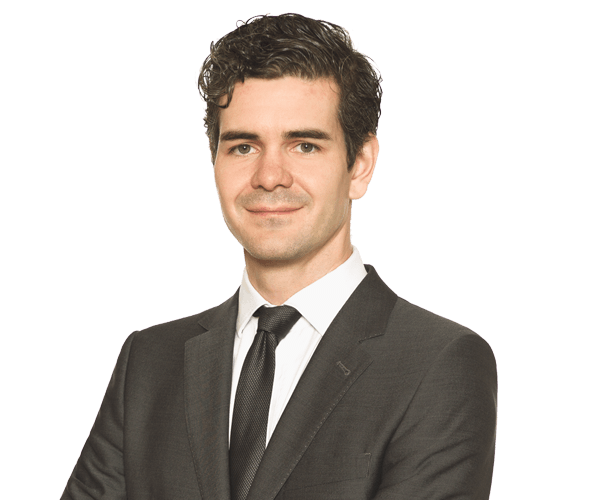
Senior Associate
Tell us what happened or what concerns you, who was involved and what you would like help with.
Start with what you know and the documents you have. You do not need to have every document ready before contacting us.